Sunday, March 16, 2014

Travel Of Comilla

Tourism of Comilla

Comilla District (Chittagong division) with an area of 3085.17 sq km, is bounded by Brammanbaria and Narayan Ganj districts on the north, Noakhali and Feni districts on the south, Tripura (state of India) on the east, Munshi Ganj and Chandpur districts on the west. Annual average temperature maximum 34.3?C, minimum 12.7?C; annual rainfall 2551 mm. Main rivers are Meghna, Gumti and Dakatia.

Comilla (Town) stands on the bank of the Gumti river. It consists of 18 wards and 46 mahallas. It has an area of 11.47 sq km and a population of 168378; male 52.56%, female 47.44%. Literacy rate among the town people is 60.3%. In the suburb there exists the Commonwealth War Cemetery Memorials, Muktajuddha Museum at Mainamati Cantonment and bangladesh academy for rural development, Mainamati Museum, Comilla Cadet College at Courtbari. Comilla Town is blessed with the memories of national poet Kazi Nazrul Islam. Nazrul Islam married twice in life, one at Daulatpur of Muradnagar upazila of the district and the other at Comilla Town. Those places have been marked with memorial plates. Poet Rabindranath Tagore visited Comilla twice. Ustad Muhammad Hussain, Fazle Nizami and Kulendu Das have enriched the cultural heritage of the town. Ustad Ayet Ali Khan established a musical institute here.

The Comilla region was once under ancient Samatat and was joined with Tripura State. This district came under the reign of the kings of the Harikela in the ninth century AD. Lalmai Mainamati was ruled by Deva dynasty (eighth century AD), and Chandra dynasty (during tenth and mid eleventh century AD). It came under the rule of East India Company in 1765. This district was established as Tripura district in 1790. It was renamed Comilla in 1960. Chandpur and Brahmanbaria subdivisions of this district were transformed into districts in 1984. Comilla district has 5 municipalities, 54 wards, 148 mahallas, 12 upazilas, 1 thana, 180 union parishads, 2704 mouzas and 3624 villages. The upazilas are comilla sadar, barura, chandina, daudkandi, laksam, brahmanpara, burichang, chauddagram, debidwar, homnA, muradnagar and nangalkot; the municipalities are Comilla Sadar, Barura, Chandina, Daudkandi and Laksham. 

Archaeological heritage and relics:


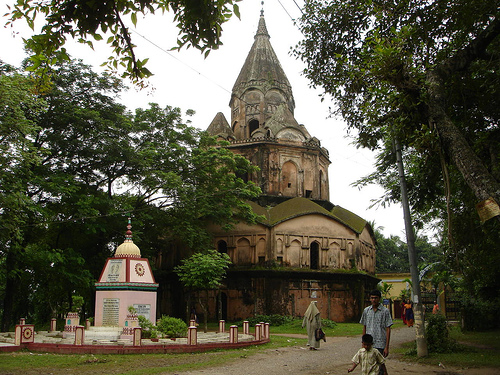
Marks of rich ancient civilization have been found in Lalmai Mainamati hills. In these hills there are plenty of archaeological sites including Shalvan Vihara, Kutila Mura, Charandra Mura, Rupban Mura, Itakhola Mura, Satera Ratna Mura, Ranir Banglar Pahar, Ananda Bazar Palaces, palaces of Bhoj King, Chandi Mura, etc. Various archaeological relics including images and metalled utensils discovered from these viharas, muras and palaces are now preserved in the Mainamati Museum. Other archaeological heritage and relics include Saptaratna Mandir (Jagannath Mandir), Shah Suja Mosque, Dharmasagar, Chandimata Mandir or Chandi Mura (on the top of Lalmai Hill of Barura), Chandala Shiva Mandir (Brahmanpara, eighteenth century), Saitshala Jami Mosque (Brahmanpara, 1719), Mazars of Panch Pir (five saints) at Shashidal (Brahmanpara, 1815), Harimangal Math (Brahmanpara, 1822), Ramnagar elongated Math (Brahmanpara, 1705), Saitshala Rammahan Mandir (Brahmanpara, 1805), Hasnabad Math and Hatiabhanga Fort (Daudkandi). 

Literacy and educational institutions:


Average literacy 33.1%; male 40.2% and female 26%. Educational institutions: university college 4, private university 1, medical college 1, teacher's training college 2, law college 1, government college 11, non-government college 56, polytechnic institute 1, para medical institute 1, homeopath college 1, cooperative college 1, government commerce college 1, government high school 9, non-government high school 444, junior high school 66, government primary school 1334, non-government primary school 799, survey institute 1, primary education training institute 1, nursing training centre 1, blind and deaf school 1. Noted educational institutions: Comilla Victoria University College (1899), Comilla Zila School (1837), Comilla High School (1842), Fazilatunnesa Government Girls' High School (1873), Comilla Cadet College,

Shashidal Union High School (1890), Chandana K B High School (1920), Madhavpur Sheikhlal High School (1911), Burichang Ananda Pilot High School (1925), Chandina Pilot High School (1916), Chauddagram H J Pilot High School (1921), Eliotganj R B High School (1908), Raipur K C High School (1912), Barpara Girls' High School (1919), Debidwar Reazuddin High School (1918), Homna Pilot High School (1929), Bhangara High School (1887), Ramchandrapur High School (1918), Sreekail College (1942). 

Historical events


Peasants Movement against the king of Tripura in 1764 under the leadership of Samsher Gazi is a notable historical event. Communal tension spread over Comilla when a Muslim was shot at Comilla town during the partiition of bengal in 1905. During the preparation of a countrywide hartal on 21 November 1921, protesting the visit of India by Prince of Wales, Kazi Nazrul Islam composed patriotic songs and tried to awaken the town people. During this time Avay Ashram, as a revolutionary institution, played significant role. Poet Rabindranath Tagore and Mahatma Gandhi visited Comilla at that time. In 1931, the British Gurkha soldiers fired indiscriminately and killed four persons of village Mohini of Chauddagram upazila when about four thousand peasants of this village revolted against paying land revenue. In a huge peasant gathering the police fired at Hasnabad of Laksham Upazila in 1932. Two persons were killed and many wounded in this firing. 

Buddis Bhihar 


This site previously called salban rajar bari came out after archaeological excavation asa Buddhist monastery and hence termed as salban vihar From terracotta seals. Plate discover here its original hare is supposed to have been vhava deva mahavihara. After the 4th king of the early deva dynasty which ruled this region during mid 7th to mid 8th century A.D.The large square monastery of 550 feet sides with 115 monastic cell. A dominant . central shrine and a number of subsidiary shrines, stapes and chapels, provides access through its monumental gate on the north while the central shrine revealed six building phases and 2nd phases of the central shrine remains buried under the 3rd, 4th and 5th periods but the remains of the 6th phases have been remove from the top. The cruciform central shrine of third period built with the monster as a single Complex.

The large assemblage of valuable antiquities recovered from excavation in the site and raw housed in the museum are of great importance in as sundaes

those contributes significantly to our knowledge of ancient vangasama tata, covering a period of about seven hundred years from 6th to 12th century .A.O. 

Famous in Bangladesh (Rasmalai of Comilla)

Rasmalai of Comilla is really very delicious sweet meat. It is very famous sweet all over the country. It made from the local pure milk ,egg, all-purpose flour, baking powder and oil. "Matree Bhandar" is the best and oldest producer of the tastiest "Rash Malai". You'll find lots of outlet at different places at Comilla claiming themselves as dealer of "Matri Bhandar" but don't get fooled. Cause there is only one showroom of the "Matri Bhandar". There is some thing about this sweet dish, the local water or the smoke flavor. If you come Comilla don't miss to go for that.

  • Location Manoharpur,Kandirpar,Comilla

  • How to get there
    From Dhaka city you can reach to the Comilla city by several bus service.After reaching Comilla city you can hire a Rickshaw or Auto Rickshaw to get to the original Matri Bhandar at Manoharpur.
    Contact : 880-81-76233

Comilla Khade


It is called khadi , because its threads are called off by ‘charka' a special typewhich is famous for khadi products. Its factory sitnaled on chandina at comilla khadi cloth are mode according to the dimands of customer. This cloth is so famous that it is also exported to foreign countries . some famous khadi products are :Lungi fatowa ,Bed sheet ,shirt ; gamsa panjabi e.t.c. Uavers gets anarage 20%profit by making khadi products Comilla is a big city and most of its population are literated . They are middle class and lower class family . Their proffesion are service holder , farmer , rikshaw driver ,business man etc. Most of them lives in villages .Many of our village's population are poor .They works on paddy field . Theirchildens does not reads in school .As they are poor , they works in paddy field ,fatory for earn money.Begides this , those lives in town , are litarated . They are service holders and drsiress man . They work in office, Bank ,court etc. Their carning sovree is better.  

Lalmai & Maynamoti Hill 


If you are in Comilla and already visited Lalmai, Moinamoti then don't miss to go Moinamoti museum – where you will find the historical things found in Lalmai & Moinamoti of 7th & 8th
centuries.The Mainamati site Museum has a rich and varied collection of copper plates, gold and silver coins and 86 bronze objects. Over 150 bronze statues have been recovered mostly from the monastic cells, bronze stupas, stone sculptures and hundreds of terracotta plaques each measuring on an average of 9" high and 8" to 12" wide. Mainamati is only 114 km. from Dhaka City and is just a day's trip by road on way to Chittagong . [Bangla Language].


 Comilla University 


Comilla University

Comilla University is a public university located at Kotbari Comilla, Bangladesh. The university was constructed on 50 acres (200,000 m2) of land at Lalmai Bihar, Moynamoti. Comilla University is affiliated by University Grants Commission Bangladesh. Professor Dr. Golam Mowlah is the founder Vice-Chancellor of Comilla University and he was removed from university on July 30 2008 and Zulfikar Ali, a professor of mathematics of the university, was given the charge. The next vice-chancellor of Comilla University, Dr. A.K.M Zehadul Karim declared to resign on 7 October 2009 after violence. Professor Amir Hossen Khan, a professor of Physics department of Jahangirnagar University, was appointed as VC on 22 November 2009. The chancellor of the university is President of Bangladesh Zillur Rahman. Its campus is declared as smoking & politics free. It started with 7 departments and in 2008 another department was added. Now there are a total of 8 departments including Computer Science & Engineering, Mathematics, Accounting & Information Systems, Marketing, Management Studies, Economics, Public Administration and English. Three more departments were announced to be opened from 2009. 

Bangladesh Academy for Rural Development (BARD)


Bangladesh Academy for Rural Development (BARD), Comilla is located at Kotbari, a rural area along the Mainamati-Lalmai (one of the archeological sites of Bangladesh) hill range in Comilla district at a distance of about 100 kilometers from the capital city of Dhaka. The sprawling campus covers an area of 156 acres of land including undulating hilly terrain and valleys. A large part of the campus is orchards, vegetable farms, nurseries, parks and roads lined with shady tropical trees. The office and the residential buildings have been designed and located in harmony with the topography and surrounding landscape. The well-planned layout of the institution and green landscape give the campus a serene and idyllic beauty.

The Academy was established in 1959 basically as a training institute to train government officials and representatives of the local government and village organizations in various subjects relating to rural development. It is an autonomous institution governed by a Board of Governors of which the Minister for Local Government, Rural Development and Cooperatives is the Chairperson. Administratively, it is attached to the Ministry of Local Government, Rural Development and Cooperatives.

The Board of Governors formulates policies and the Director General of BARD as the Chief Executive implements the policies and conducts the day-to-day affairs within the framework of the ordinance and Service Rules of the Academy. The activities of the Academy carry out by its Faculty working in 9 Divisions each of which is headed by a Director. The Divisions are divided into two broad categories : Service Divisions and Academic Divisions. The Service Divisions include Training; Research; Project; and Administration. The Academic *Divisions are Rural Administration and Local Government; Rural Economics and Management; Rural Education and Social Development; Rural Sociology and Demography; and Agriculture and Environment. The strength of the faculty is 60 including the Director General, Additional Director General, 9 Directors, 14 Joint Directors, 13 Deputy Directors and 22 Assistant Directors. 305 supporting officials and staff assist them.

The Academy is famous for its evolved model “Comilla Approach to Rural Development” in home and abroad; and received National Award in 1986 for its remarkable contribution in Rural Development. www.bard.gov.bd 
 

Hospital

Medical :college hospital 1, zila sadar hospital 1, police hospital 1, district hospital 1, upazila health complex 12, military hospital 1, diabetic hospital 1, tuberculosis hospital 1, modern hospital 2, charitable dispensary 26, maternity and child welfare centre 2, rural health centre 2, leprosy hospital

Hotel Of Comilla

1. " Bangla Restora " this hotel owner by best singer of "ASIF", it is infront of comilla zilla School.(non residential).
PHONE:081-61340,FAX:081-75811, MOBILE:01911-390939
E-MAIL: info@banglarestorabd.com
web: www.banglarestorabd.com
2. " Nurjahan hotel " is situated in comilla Paduar Bazar highway of Dhaka Chittagong. (Residential).
3. " Jur kanon hotel " is situated in comilla Shoa gong highway of Dhaka Chittagong. (non residential).
4. " Dina hotel " it is situated in comilla Kandirpar. (non residential).
5. " Yum-yum " situated in comilla Monohorpur, it is best of "Barger". (Non residential).
6. " Chondo mear hotel " Chondo mear Hotel is situated of Comilla Padua Bazar it is best for (alor barta). (non residential).
7. " Moynamoti hotel " it is situate in Comilla Badsha Mear Bazar. (Residential )
8. " Melodi " it is situate in Comilla Badsha Mear Bazar. (Residential). 
9. "Comilla City Restaurant"   it is stay in Kandirpar, Comilla.
10."Green Castle" it stay in 2n Kandirpar, Ranir Bazar Road, Comilla.


Residential Hotels and Rest Houses in Comilla

Hotel Noorjahan
Paduar Bazzar, Comilla
Hotel Q Palace
Race Course, Comilla
Amania Rest House
Kandirpar, Comilla
Hotel Nidrabag
Rajgonj, Comilla
Masum Rest House
Shachangacha, Comilla
Hotel Melody
Shachangacha, Comilla
Hotel Sonali
Kandirpar, Comilla
Hotel Nur
Shachangacha, Comilla
Sabuj Rest House
Station Road, Comilla
Hotel Dreamland
Chatipotti, Comilla

Vita World
Chiora, Chowddogram, Comilla
Hotel Meraj
Kandirpar, Comilla
Ajmeer Rest House
Monohorpur, Comilla
Hotel Al-Falah
Alekhar Char, Comilla
Hotel Al-Rafiq
Kandirpar, Comilla
Ansaria Rest House
Mogoltuli, Comilla
Ashik Resedential Rest House
Nazrul Ave., Comilla
New Al-Ameen Rest House
Alekhar Char, Comilla
Hotel Midtown
Police Super Market, Comilla
Dhaka Rest House
Rail Gate, Comilla

Important Telephone Numbers

Fire Service & Civil Def. 5888, 5090
Sadar Hospital Enq. 5022
Police Enquiry 5053, 5012
T & T Excg. Eng. 6370
Electricity Eng. 5041
Education Board Off 6172
Jail Enquiry 6347
Rly. Station Enq. 6358
Biman 6509
Municipality Enquiry 6006
Ansar Enquiry 6026
Titas Gas Enquiry 5751
Phonogram Booking 6369
Post Office Enquiry 6056

Comilla Banks :

Sonali Bank 6569,
Janata Bank 6568
Pubali Bank 6255
Rupali Bank 6655
Agrani Bank 6517
Uttara Bank 5741
Krishi Bank 6816
Shilpa Bank 6191
NCC Bank
Brack Bank
Prime Bank
Duch Bangla Bank

Schools and Colleges :

 Zilla School 8444
CARE Bangladesh 6538
Comilla School 6865
Govt. Lab. School 6061
Residential Model School 5079
Cant H/School 6613
Ispahani H/School 5959
Victoria Govt. College 5235
Comilla College 8413
Women College 5853

Hotels

Hotel Abedin 6014
Mainamoti Hotel 6455
Amania Hotel 5668
Postal Rest House 5605
Nidrabag Hotel 5820
Raeya Hotel 6743

Newspapers


Itakhola Mura , Comilla
Salban Bhihar, Comilla


Friday, March 14, 2014

Some of Comilla

Comilla


Comilla  is a city in south-eastern Bangladesh, located along the Dhaka-Chittagong Highway. It is the administrative center of the Comilla District, part of the Chittagong Division.

History of Comilla

         The Comilla region was once under ancient Samatat and was joined with Tripura State. This district came under the reign of the kings of the Harikela in the ninth century AD. Lalmai Mainamati was ruled by Deva dynasty (eighth century AD), and (during tenth and mid eleventh century AD). In 1732 it became the center of the Bengal-bakced domain of Jagat Manikya.[1]
It came under the rule of East India Company in 1765. This district was established as Tripura district in 1790. It was renamed Comilla in 1960. Chandpur and Brahmanbaria subdivisions of this district were transformed into districts in 1984


  Historical events
  Peasants Movement against the king of Tripura in 1764 under the 
  leadership of Samsher Gazi is a notable historical event. Born in an   
  ordinary peasant family Shamsher Gazi became the ruler of the entire  
  Chakla Raushanabad which was spread over the south of Comilla and  
  the north of the Noakhali districts. Gradually he brought the whole of   
  the Comilla district under his control. Later he conquered Nizampur 
  Pargana, thus making himself the uncrowned king of the region  between  the Meghna, the Muhuri and the Manuganga rivers.
Shamsher Gazi was born of a poor Muslim peasant family in the year 1712 at Kungura village under Dakshin Shik pargana north of Chittagong which formed part of Tripura's Manikya kingdom. While working as 'Tehshildar' in the local landlord Nasir Mohammed's office Shamsher is said to have received divine blessing of a 'Pir'.

From his very boyhood, Shamser Gazi was intelligent and brave. Chakla Raushanabad was at that time under the jurisdiction of the state of Tripura. Its zamindar was Nasir Mahmud. Nasir Mahmud brought Shamser up with love and care. Young Shamser was ambitious. Shamsher Gazi came to grief after his proposal to marry the landlord's daughter was rudely rejected and he was ordered to be nabbed. Shamsher Gazi organized an armed force. He soon captured Nasir Mohammed's domain in 1745.

Towards the beginning of the British Raj, zamindari oppression had made the life of the peasants and farmers miserable. Shamsher Gazi was wise, efficient, kind and a bountiful ruler. He granted rent exemption to poor peasants, managed the economy well and this led to the reduction of the prices of essential commodities. He granted freeholds to many Hindus and Muslims. He dug numerous ponds and built many schools in and outside his capital Jagannath Sonapur. Of the ponds he dug, 'Kaiyar Sagar' was the largest.
Having consolidated his position as landlord of Dakshin Shik and Meherkul parganas Shamsher turned his attention to Tripura and ousted King Krishna Manikya after a brief conflict in the year of 1748. He encountered serious opposition from the tribal subjects in the hilly interiors of the state who fought behind the king of Tripura.

The king of Tripura Krishna Manikya sent two expeditions of the powerful Kuki armies against Shamser Gazi. Both failed before Shamser's extraordinary military acumen and heroism. Shamser Gazi conquered Udaypur, the capital of Tripura. The king fled to Agartala and sought the protection of Nawab MIR QASIM. Shamsher Gazi was killed in 1760 when he responded to a false invitation for a dialogue with the nawab. Thus Krishna Mainkya was able to regain his lost Kingdom.
Communal tension spread over Comilla when a Muslim was shot in Comilla town during the partition of bengal in 1905. During the preparation of a countrywide hartal on 21 November 1921, Kazi Nazrul Islam composed patriotic songs and tried to awaken the town people by protesting the Prince of Wales's visit to India. During this time, Avay Ashram, as a revolutionary institution, played a significant role. Poet Rabindranath Tagore and Mahatma Gandhi visited Comilla at that time. In 1931, approximately four-thousand peasants in Mohini village in Chauddagram upazilla revolted against a land revenue tax. The British Gurkha soldiers fired indiscriminately on the crowd, killing four people. In a huge peasant gathering, the police fired at Hasnabad of Laksham Upazila in 1932. Two people were killed and many were wounded.

In 1931, on 14 December Sunity Choudhuri and Shanti Ghosh from Faizunnesa Girls School shot dead Magistrate Mr. Stevens. This was the first time that women come to the forefront in armed struggle for freedom.

Marks of the War of Liberation mass killing site: 5, Laksham, Comilla Cantonment, Homna, Beltali and Rasulpur; mass graves at Betiara, Muzaffarganj, Nagaripara, Cantonment, Krishnapur, Dhananjay, Dilabad and Laksham Bidi Factory; memorials at Comilla Victoria College, Betiara, Police Line, Cantonment, Laksham, Polytechnic Institution and Haratali.


Tourism

Comilla has a number of tourist attractions. Marks of rich ancient civilization have been found in Lalmai Mainamati hills. In these hills there are plenty of archaeological sites including Shalvan Vihara, Kutila Mura, Charandra Mura, Rupban Mura, Itakhola Mura, Satera Ratna Mura, Ranir Banglar Pahar, Ananda Bazar Palaces, palaces of Bhoj King, Chandi Mura, etc. Various archaeological relics including images and metalled utensils discovered from these viharas, muras and palaces are now preserved in the Mainamati Museum. Mainamati is a famous Buddhist archaeological site. The Mainamati Museum is a prominent torist attraction. Poet Rabindranath Tagore and Indian leader Mahatma Gandhi visited Comilla in 1921. There is a World War II war cemetery in Comilla. It is protected and maintained by the Commonwealth War Graves Commission.


Administration & Development

Comilla is famous for different types of sweets and Batik printed cloth. The people of Comilla are multiethnic. To some extent, there is more Afghan and British heritage in Comilla. Green or hazel eyes are more common in Comilla than in other parts of Bangladesh.

It is a highly Muslim dominated area and one can find many economically disadvantaged people. But it is home district of many educated Bangladeshis who have achieved great success in their career as Bangladeshi expatriates or in other parts of the Nation. The majority of the denizens lead an agrarian lifestyle, depending on their fields for their livelihood. A much smaller number of Hindus are present in this area. Every Muslim festival is celebrated in big way. Especially Eid and Ramzan. Most of the Muslims are Sunni and few are Shia. There is electricity in most of the area at present in Comilla.

In the suburb there exists the Commonwealth War Cemetery Memorials, Muktajuddha Museum at Mainamati Cantonment and Bangladesh academy for rural development, Mainamati Museum, Comilla Cadet College at Courtbari. Comilla Town is blessed with the memories of national poet Kazi Nazrul Islam. Nazrul Islam married twice in life, one at Daulatpur of Muradnagar upazila of the district and the other at Comilla Town. Those places have been marked with memorial plates. Poet Rabindranath Tagore visited Comilla twice. Ustad Muhammad Hussain, Fazle Nizami and Kulendu Das have enriched the cultural heritage of the town. Ustad Ayet Ali Khan established a musical institute here.

Marks of rich ancient civilization have been found in Lalmai Mainamati hills. In these hills there are plenty of archaeological sites including Shalvan Vihara, Kutila Mura, Charandra Mura, Rupban Mura, Itakhola Mura, Satera Ratna Mura, Ranir Banglar Pahar, Ananda Bazar Palaces, palaces of Bhoj King, Chandi Mura, etc. Various archaeological relics including images and metalled utensils discovered from these viharas, muras and palaces are now preserved in the Mainamati Museum. Other archaeological heritage and relics include Saptaratna Mandir (Jagannath Mandir), Shah Suja Mosque, Dharmasagar, Chandimata Mandir (on the top of Lalmai Hill of Barura), Chandala Shiva Mandir (Brahmanpara, eighteenth century), Saitshala Jami Mosque (Brahmanpara, 1719), Mazars of Panch Pir (five saints) at Shashidal (Brahmanpara, 1815), Harimangal Math (Brahmanpara, 1822), Ramnagar elongated Math (Brahmanpara, 1705), Saitshala Rammahan Mandir (Brahmanpara, 1805), Hasnabad Math

Comilla City Corporation


Comilla is one of the fast growing city located beside the Dhaka Chittagong highway 97 km south to Dhaka 167 km north to Chittagong. Comilla, one of the oldest town of the sub-continent was declared municipality in the year of 1864 and Comilla Sadar Dhakin Pourashava was declared in 2003. Abolishing these two pourashavas and consisting of their areas, the historical event, declaration of Comilla City Corporation was occurred on 10 July 2011. Currently its population is 5 lac and area is 53.04 sqkm.

City corporation is mainly responsible to provide services like waste management, maintenance of drainage system, street lighting, water supply, communication, birth and death registration, issuing of trade license, non-motorized vehicle license, recreation . This site provides basic information about Comilla City Corporation, its vision, master plan, organogram, history, activities and useful link to the various offices. As a dweller of Comilla city or any other person can get information from this site just to meet curiosity and for any other purposes. This site will also help the user to understand the way Comilla City Corporation is functioning and its efforts towards fulfilling the aspirations of the dwellers of Comilla city through providing various quality services. We always appreciate any thoughtful feedback and suggestions.

Comilla City Corporation at a glance


General Information

Area                                                                                                                                        
:
5 3.04 Square K.M.
Ward
:
27 Nos
Population
:
5 Lac

Tax

Holding Tax                      
:
33,886 Nos 174 Nos
33,702 Nos

Market

Market
:
08 Nos
Shopping Complex
:
5 Nos
Own Shops
:
984 Nos

License

Trade License  8,412Nos
:
 
Rickshaw License  10,530Nos
:
 

Communication

Road
:
482 K.M.
a) Bituminous
:
197 K.M.
b) CC
:
60 K.M.
c) RCC
:
16 K.M.
d) Brick Flat Soling
:
55 K.M.
e) Earthen Road
:
154 K.M.
Culvert  
:
279Nos
Road intersection
:
06Nos
Bridge
:
02Nos
Footpath
:
20.00 K.M.

Water Supply

Overhead Tank  
:
06 Nos
Capacity
:
54 Lac Liter
Deep Tube well
:
23 Nos
Pipe Line  
:
146 K.M.
House Connection  
:
5015 Nos
Street Hydrant
:
300 Nos
Pump Station/ house
:
23 Nos
Arsenic Status                                                 
:
Within acceptable limit
Pumping Hour                                                 
:
07 Hour
 

Street Lighting

Electricity Line
:
132.35K.M.
Light Post  ­
:
4,661 Nos
Tube Light Point
:
1,060 Nos
Energy Savings Light Point
:
3,601 Nos
Meter/ Switch Point
:
22 Nos
 

Vehicle

Garbage Truck
:
15 Nos
Trucktor
:
04 Nos
Bulldozer
:
02 Nos
Jeep
:
04 Nos
Motorcycle
:
9 Nos
Hydraulic Beam lifter
:
01 Nos
Road Roller (4 ton – 6 ton)
:
03 Nos
Road Roller (8 ton – 10 ton)
:
04 Nos
Excavator (8 Cft)
:
01 No.
Bulldozer
:
01 No.

Drainage System

Drain
:
177.14 K.M.
a)  Pucca Drain
:
65.50 K.M.
b)  Earthen Drain
:
105.46 K.M.
Canal
:
17.50K.M.
 

Public Health

Public Toilet
:
16 Nos
Sanitary Latrine                                              
:
23,802 Nos
Dustbin                                                           
:
155Nos
Sanitary Land field
:
01Nos
EPI Centre  Permanent-
:
10 Nos
Temporary -
:
14 Nos
Hospital
:
02 Nos
Clinic (TB)
:
01 Nos
Maternity Clinic
:
02 Nos
Private Clinic
:
59 Nos
Diabetic Hospital  
:
01 No


UPPRP Project

Community Centre
:
01 No
Total Urban Community
:
59 Nos.
Total Community Family
:
16939
Total Community Member
:
74,353
Total Community Deepset
:
452 Nos
Total Sanitary Latrine
:
1457
Total Road with Footpath
:
6441 meter
Drain
:
1330 meter
Improved cooker
:
1009 Nos
 

UPHSDP Project

Nagar Matri Sadan
:
01 No
Nagar Health Centre
:
06 Nos
Satellite Clinic
:
72 Nos.
Religious Institution
Mosque
:
120
Eidghah
:
1
Temple
:
07
Graveyard
:
06
Burning Ghat
:
02
Church
:
02
Buddist Temple
:
01
Orphanage
:
07
 

Law & Order

Police Station
:
02
Police Fari
:
04
Judge court
:
01

Education

Public University
:
01
Private University
:
01
Govt College
:
04
Private College
:
12
Cadet College
:
01
Public Medical College
:
01
Private Medical College
:
02
Art College
:
01
Law College
:
02
Homoeopathic Medical College
:
01
Public Polytechnic Institute
:
01
Public Engineering Survey Institute
:
01
Private Polytechnic Institute
:
03
Madrasha
:
37
Teachers Training College
:
02
Govt High School
:
03
Non-Govt High School
:
20
Govt Primary School
:
55
Kinder Garten School
:
 

Recreation

Park
:
01
Zoo
:
01
Cinema Hall
:
04
Stadium
:
01
Auditorium
:
01
Gymnasium
:
02
Recreation Club
:
02
  

Communication

Railway Station
:
01
Bus Station
:
06
Ferry Ghat
:
01
T & T Office
:
01
GPO
:
01
Post Office
:
16

Beautiful Places

Dharmashagor Dighi(Digging by Tripura Maharaza)
Town Hall( Constructed by Tripura Maharaza)
Sachin Dev Barman House, South Chartha(Popular Singer of Sub-Continent), Where Poet Kazi Nazrul Islam Joined in Singing Program
Zoo, Chotora
Botanical Garden, Chotora
Ranir Kothir, Dharmasagarpar
KTCC, Comilla
Selina Garden, Neura
Nurjahan Eco Park, Paduarbazar Bisharoad
BARD, Kotbari
Mainamoti Musium,  Kotbari
Rupban Mora,  Kotbari
Salbon Bihar,  Kotbari


History of Comilla City Corporation

Comilla region was once under ancient Samatat and was joined with Tripura State. The history of Comilla town goes back to the 9 th and 10 th century A.D. when the old fortified town “Salban Vihars, Mainamati”, the center of Buddist civilization flourised. This district came under the reign of the kings of the Harikela in the ninth century AD. Lalmai Mainamati was ruled by Deva dynasty (eighth century AD), and (during tenth and mid eleventh century AD). In 1732 it became the center of the Bengal- backed domain of Jagat Manikya. The Peasants Movement against the king of Tripura in 1764, which originally formed under the leadership of Shamsher Gazi, is a notable historical event in Comilla. It came under the rule of East India Company in 1765. This district was established as Tripura district in 1790. On the first of October, 1960 the name of the district was chaneged from Tippera to the more widely used Comilla. Chandpur and Brahmanbaria subdivisions of this district were transformed into districts in 1984. Comilla City as usual is the largest city of Comilla zila in respect of both population and area.

Nothing is definitely known about the origin of the city name. There is a popular belief that the word Comilla might had been derived from the word Kamalanka, the old kingdom of Samatat during the first part of the 6th century A.D.

Comilla faced many important historical events. Communal tension spreaded over Comilla, when a Muslim was shot in the town during the partition of Bengal in 1905. On 21 November 1921, Kazi Nazrul Islam composed patriotic songs and tried to awaken the town people by protesting the Prince of Wales’s visit to India. During this time, Ovoy Ashram, as a revolutionary institution, played a significant role. Poet Rabindranath Tagore and Mahatma Gandhi visited Comilla at that time. In 1931, approximately 4000 peasants in Mohini village in Chauddagram Upazilla revolted against a land revenue tax. The British Gurkha s oldiers fired indiscriminately on the crowd, killing four people. In a major peasant gathering, the police fired at Hasnabad of Laksham Upazila in 1932. Two people were killed and many were wounded.
Comilla Sadar Dakshin Paurashava was comparatively a newly formed Class “A‟ Paurashava. Was declared as a Pourashava on 22/07/2003 The Pourashava was divided into 9 wards.

Comilla City Corporation was declared on 10 July 2011 comprising the area of Comilla pourasava and Comilla  Sadar  Dhakshain  Pourashava  . First ever election of City Corporation was held in 5th January, 2012 and elected Mayor Md.Monirul Hoque Shakoo 27 councilors and 9 women councilors for reserve seats took oath on 2nd February, 2012. The first official meeting of Comilla City Corporation was held in 9th February of 2012.